
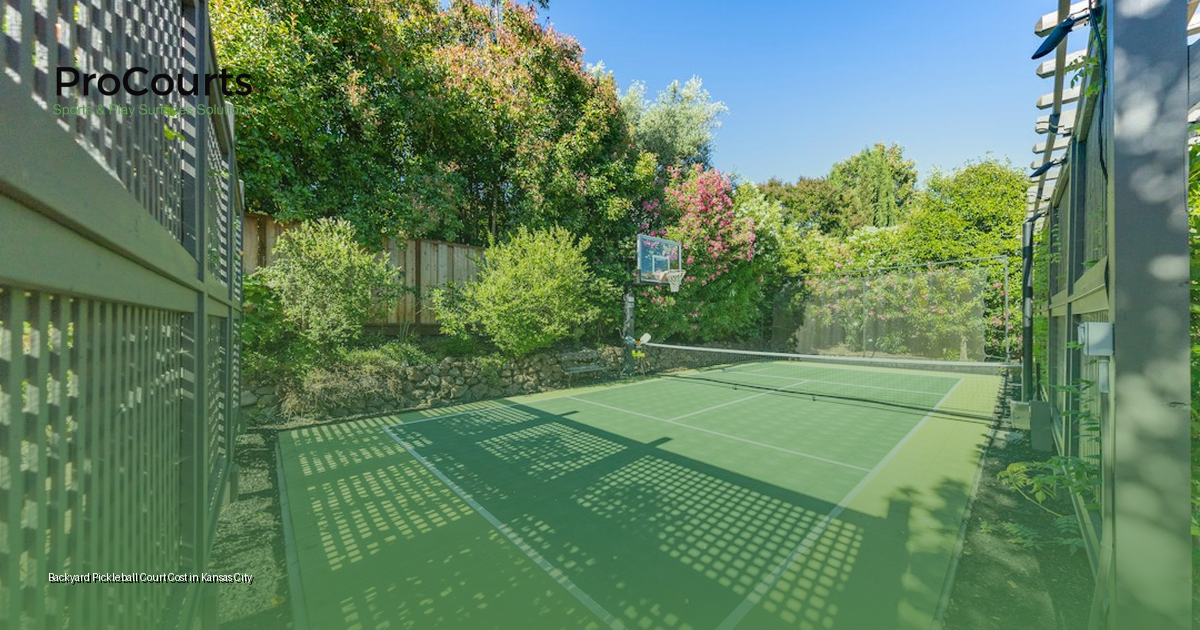
A backyard pickleball court in Kansas City typically costs between $25,000 and $55,000 for a full-size, professionally built court, with most homeowners landing in the $30,000 to $45,000 range once site prep, a concrete base, and an acrylic surface are included. Smaller or shared-use layouts can come in lower, while premium cushioned surfaces, fencing, and lighting push the top end higher. The single biggest cost variable here is not the surface itself but what sits underneath it, and in the Kansas City metro that means grading, drainage, and dealing with our region’s expansive clay soils.
Key takeaways
- Expect $25,000 to $55,000 for a built-to-last backyard pickleball court in the KC metro, most commonly $30,000 to $45,000.
- Site preparation and drainage are frequently among the largest line items, driven by the area’s clay-heavy soil and freeze-thaw cycles.
- A standard court needs a playing area of 20 by 44 feet, but the recommended total footprint with safety margins is roughly 30 by 60 feet.
- Acrylic hard-court surfacing is the regional standard; cushioned systems and post-tensioned slabs add cost but extend lifespan.
- Permits, fencing, and lighting are frequently underestimated line items, especially in neighborhoods with HOA review.
What actually drives the price in Kansas City
Most online cost estimates assume flat, stable ground and a mild climate. The Kansas City area gives you neither. The metro sits on a mix of glacial till and clay soils that swell when wet and shrink when dry, and we cycle through numerous freeze-thaw events each winter. That combination is exactly what cracks a poorly built slab. So when you compare quotes, the meaningful differences usually hide in the line items below the surface. On a typical KC project, site work and drainage are often one of the two largest cost categories, right alongside the concrete itself.
Site preparation and grading
If your yard slopes, or sits on heavy clay common across Johnson County and the Northland, the contractor has to cut, fill, and compact a stable sub-base before any concrete is poured. On a gently sloped suburban lot this might add $4,000 to $8,000. On a steep or rocky lot in areas like the bluffs near the Missouri River, excavation and retaining work can add considerably more.
Drainage
Kansas City’s climate is defined by heavy spring and early-summer storms, and much of the annual precipitation arrives in short, intense bursts, a pattern the National Weather Service tracks for the metro. Standing water under a slab is the enemy of longevity. Proper drainage, which may include a gravel base, perimeter drains, or French drains, is not optional here. Budget for it rather than hoping the lot sheds water on its own.
The concrete base
For a Kansas City court, a reinforced concrete slab is the standard choice because it tolerates our freeze-thaw swings better than asphalt over the long run. A properly specified slab for a court this size is a meaningful share of the budget. Cutting corners on slab thickness or reinforcement is the most expensive mistake you can make, because the surface above it is only as good as the base below.
The playing surface
Multi-layer acrylic coating over concrete is the regional workhorse: durable, low maintenance, and available in a wide palette. Cushioned acrylic systems cost more but are easier on knees and ankles, which matters if the court sees daily play. The surface layer is often a smaller slice of the total than first-time buyers expect, so the overall cost to build a pickleball court is driven far more by what happens before the color goes down.
Sizing your court and your budget
A regulation pickleball court is 20 feet by 44 feet of playing surface. For safe, comfortable play you want overrun on all sides, which brings the recommended total footprint to about 30 by 60 feet. Many Kansas City backyards, especially newer builds in Lee’s Summit or Overland Park, can accommodate this, but older lots in neighborhoods like Brookside or Waldo may be tighter and require a custom layout.
If space or budget is limited, you have options: a smaller recreational court, or a combination court striped for both pickleball and basketball. Sizing decisions ripple straight into cost, since every extra square foot adds base, surface, and fencing.
The line items people forget
- Fencing: A 10-foot perimeter fence to keep balls in play is common and can add several thousand dollars depending on length and material.
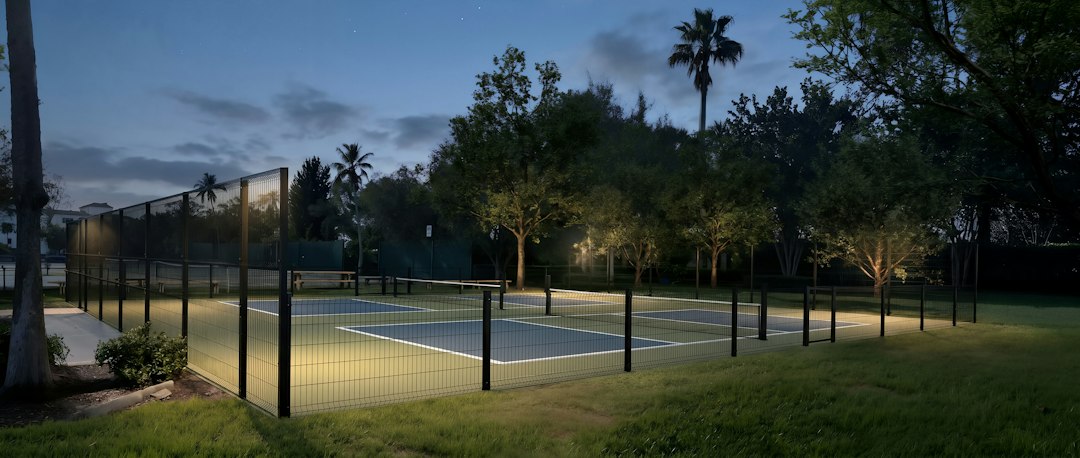
- Lighting: LED court lighting extends play into Kansas City’s early winter evenings but adds both fixture and electrical costs.
- Net systems and accessories: Permanent posts and quality nets outlast portable setups.
- Color and striping: Custom color schemes and multi-sport striping are modest add-ons with big visual payoff.
- Permits and HOA review: Many municipalities in the metro require permits for the slab, fencing, or lighting, and HOAs may have their own rules. Confirm requirements with your local building department and a licensed contractor before you dig.
How to protect your investment
The courts that stay crack-free in this climate are the ones built on a correctly engineered base and resurfaced on schedule. Acrylic surfaces generally need recoating every few years, and that routine maintenance is far cheaper than a structural repair. When you request quotes, ask each builder to spell out slab specs, drainage plan, and surface system, not just a bottom-line number. A low bid that skips drainage is not a deal, it is deferred expense.
Timing matters too. Spring and early fall offer the stable, moderate conditions our region’s installation and curing work favors, while deep summer heat and winter freezes complicate the schedule. Done right, pickleball court installation in Kansas City is a one-time build rather than an annual repair project.
Is it worth it?
Pickleball remains one of the fastest-growing sports in the country, named the fastest-growing sport in the United States for three straight years by the Sport & Fitness Industry Association in its 2023 reporting. For Kansas City homeowners who play regularly, a private court removes the wait for crowded public courts and adds a genuine lifestyle feature to the property. A well-built backyard pickleball court in Kansas City, engineered for our soil and climate, is a durable asset rather than a recurring repair bill.
Ready to scope your own project? Reach out through our contact page for a site-specific estimate, explore finish options with our court color designer, or read our deeper backyard pickleball court guide for KC before you commit.