
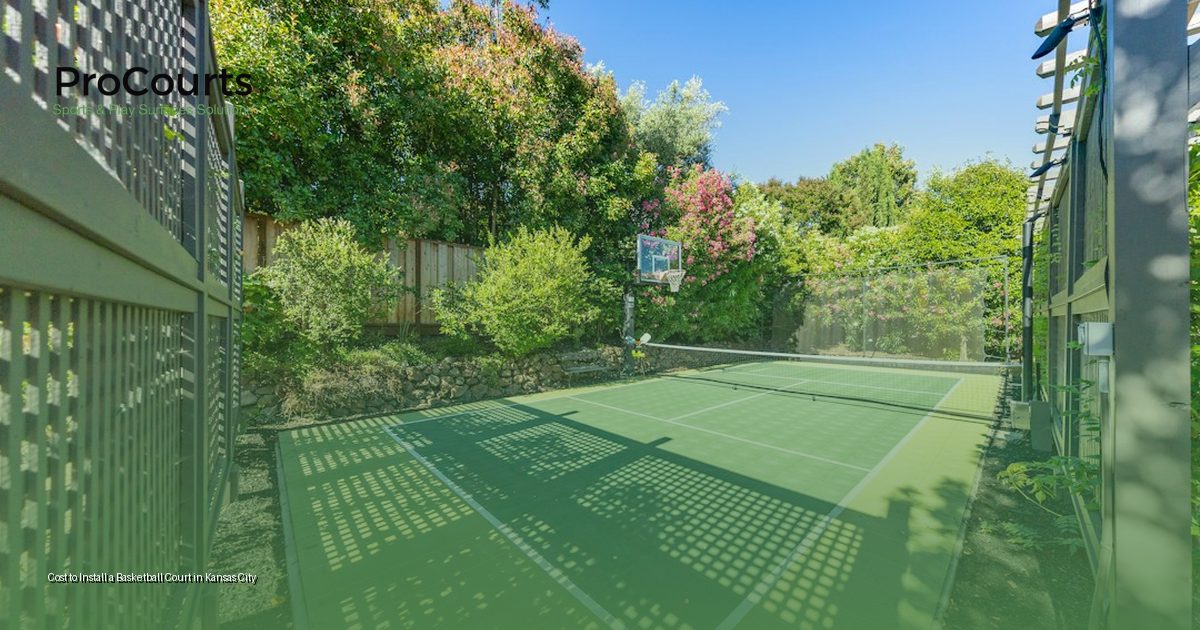
In Kansas City, MO, a residential basketball court typically costs between $15,000 and $45,000 installed, depending on size, surface, and site prep. A compact half-court (roughly 30×30 feet) with a concrete base and an acrylic sport coating usually lands in the $15,000 to $25,000 range, while a full-size court (94×50 feet) with premium surfacing, drainage, and accessories can run $40,000 or more. The single biggest factors in the cost to install a basketball court here are excavation, the concrete or asphalt base, and how much grading your yard needs before the slab can be poured.
Key takeaways
- Budget range: Most Kansas City backyard courts fall between $15,000 and $45,000, driven mostly by size and base work.
- The base is the biggest hidden cost: A properly poured, reinforced concrete slab often accounts for a large share of the total.
- Local soil and freeze-thaw matter: Kansas City’s expansive clay soils and winter freeze-thaw cycles make drainage and slab thickness non-negotiable.
- Surface choice affects both cost and feel: Modular tile, acrylic hard court, and asphalt each carry different price tags and playability.
- Add-ons add up: Hoops, fencing, lighting, and custom colors can add several thousand dollars each.
What actually goes into the price
When homeowners ask what a court costs, they are usually picturing the paint and the lines. In reality, most of the money is underground and out of sight. The base everything else rides on is the foundation of the whole build, and in a market like Kansas City it deserves extra attention. Skimp here and you will pay again in a few years when cracks telegraph up through the coating.
Here is how the cost to install a basketball court typically breaks down:
- Site prep and excavation: Grading, removing sod and topsoil, and hauling off spoil. Sloped or heavily treed lots cost more.
- Sub-base and drainage: Compacted aggregate and a plan to move water away from the slab.
- Concrete or asphalt base: Usually the largest single line item.
- Surfacing: Acrylic hard-court coatings or modular snap-together tiles.
- Accessories: Hoops, striping, fencing, and lighting.
Why Kansas City’s climate and soil change the math
This is where a court built in Kansas City is genuinely different from one built in a milder, drier market. Much of the metro, from Brookside and Waldo to the newer subdivisions out in Lee’s Summit and the Northland, sits on heavy expansive clay. That clay swells when wet and shrinks when dry, which puts constant movement under any slab. Combine that with our real winters, where the ground repeatedly freezes and thaws between December and March, and you have the two classic causes of court cracking.
According to the National Weather Service, the Kansas City area experiences a wide annual temperature swing with both hot, humid summers and multiple hard freezes each winter. That freeze-thaw reality is exactly why a thicker, properly reinforced slab and real drainage work are worth the extra money up front. A licensed contractor should evaluate your specific soil and grade before quoting, and you should always confirm any structural or code questions with a qualified professional.
Court size and what it costs
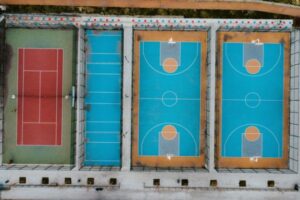
Half-court (around 30×30 feet)
The most popular backyard choice in Kansas City. It fits comfortably on many suburban lots, supports real 3-on-3 play, and keeps the concrete bill manageable. If you are weighing dimensions, our guide on whether 30×30 is big enough for a basketball court walks through the trade-offs.
Full court (94×50 feet)
A regulation full court roughly triples the surface area of a half-court, and cost scales with it. For exact playing dimensions, see our basketball court measurements reference. Most residential clients choose a full-size half-court or a modest full court rather than true regulation, simply because of yard space.
Surface options and how they compare
- Acrylic hard court over concrete: The classic. Excellent ball response, customizable color, and a familiar feel. Requires periodic resurfacing as the coating wears, and our guide to the signs your court needs resurfacing explains what to watch for.
- Modular sport tiles: Snap-together tiles over concrete. Easier on joints, forgiving in our freeze-thaw climate because the tiles flex, and quick to install. Typically a higher material cost than acrylic.
- Asphalt base: Sometimes less expensive to install than concrete, but generally more prone to cracking over time in a freeze-thaw region, which can raise long-term maintenance costs.
Add-ons that move the number
The base court is only part of the picture. Adjustable or in-ground hoops, perimeter fencing to keep balls in the yard, LED lighting for evening play, and custom colors or a painted key all add cost. If you want a team look or a logo at center court, our accessories and logo installation options and the color designer tool let you preview combinations before committing.
Is it worth it?
For many Kansas City families, a home court replaces years of hauling kids to the gym and adds usable outdoor living space. We break down the return more fully in our post on whether a backyard basketball court is worth it. As with any project touching permits, setbacks, or drainage easements, check with your municipality and a licensed professional before you build.
Get a real number for your yard
Because site prep varies so much lot to lot, the only way to know your true cost to install a basketball court is an on-site evaluation. When you are ready, contact our team for a walkthrough and a written estimate tailored to your Kansas City property.