
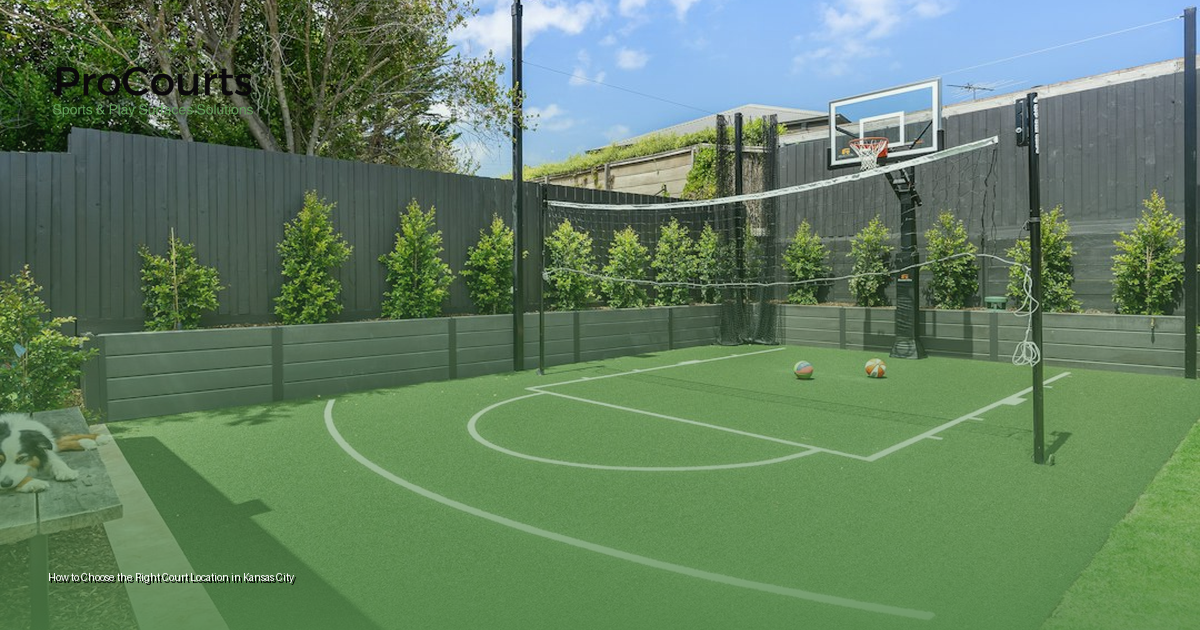
The best court location in Kansas City is a level, well-draining spot that gets consistent sun, sits clear of large trees and underground utilities, and leaves enough buffer around the playing lines for safe movement. In our rolling, clay-heavy Kansas City soils, drainage and grading usually matter more than any other single factor, because standing water and freeze-thaw cycles are what destroy a surface fastest. Get the site right before you ever pour a slab, and the court will last decades.
Key takeaways
- When deciding where to build a court in Kansas City, pick the flattest area you can or budget for grading. Our clay soil and seasonal rain make drainage the make-or-break issue.
- Orient the court roughly north-south so the morning and evening sun does not blind players.
- Keep the pad clear of large shade trees, which drop leaves, drip sap, and push roots that crack surfaces.
- Leave safety run-off room beyond the lines, and check setbacks and utilities before you dig.
- Confirm property lines, easements, and any permit or HOA rules with the right local authority.
Start with drainage and slope, not aesthetics
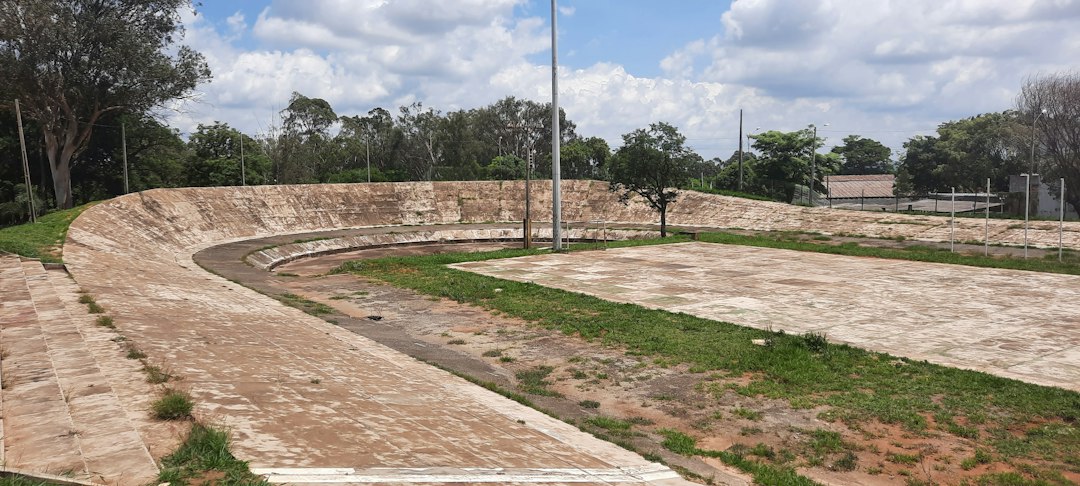
Kansas City sits on expansive clay soils that swell when wet and shrink when dry. That movement, combined with our freeze-thaw winters, is the number one cause of cracked and heaved court surfaces across the metro, from Brookside to Lee’s Summit. The ideal site sheds water instead of collecting it. Avoid the low point of a yard where runoff pools after a thunderstorm, and steer clear of the bottom of a slope where water sheets toward the pad. Good court drainage in Kansas City starts with where you put the court in the first place.
A properly built court is not perfectly flat. It carries a slight, uniform pitch (commonly around one inch per ten feet) so rain runs off cleanly. If your best available spot slopes the wrong way or holds water, that is a grading and sub-base problem, not a dealbreaker. It just needs to be engineered in from the start rather than discovered later.
Get the sun orientation right
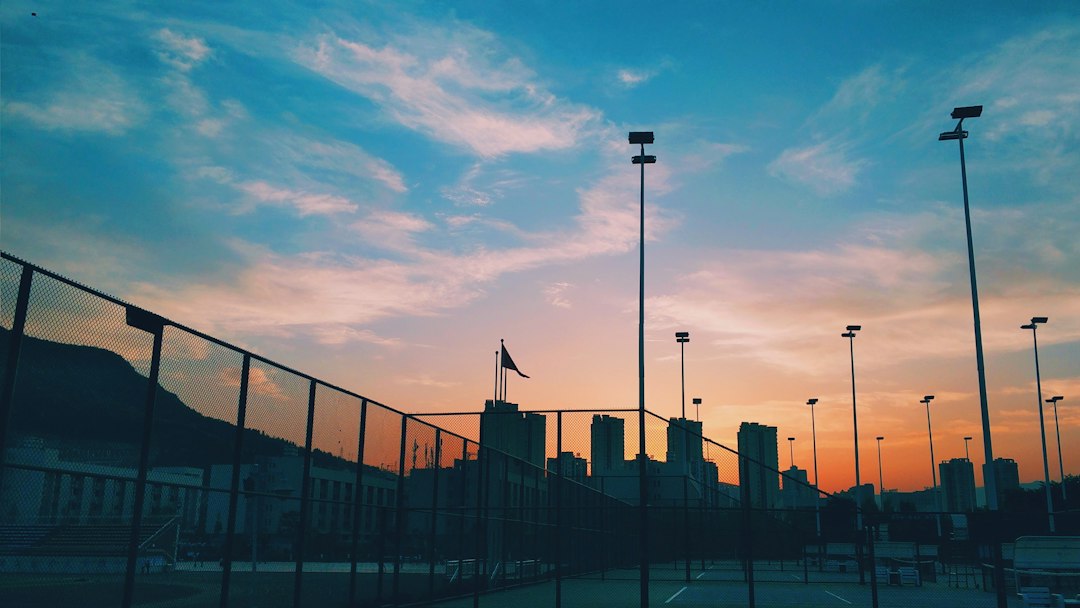
Kansas City summers bring long, bright evenings, and nobody wants to serve or shoot straight into a setting sun. The standard recommendation is to orient the long axis of the court north-south so players face east and west with the sun moving across the court rather than directly into their eyes at sunrise and sunset. If your lot forces a compromise, favor shading the most-used end or plan play around peak glare hours.
Consider summer heat too. Our humid Missouri summers push surface temperatures high on dark colors, so sun exposure interacts with your color choice and any planned shade structures.
Mind the trees, roots, and overhead lines
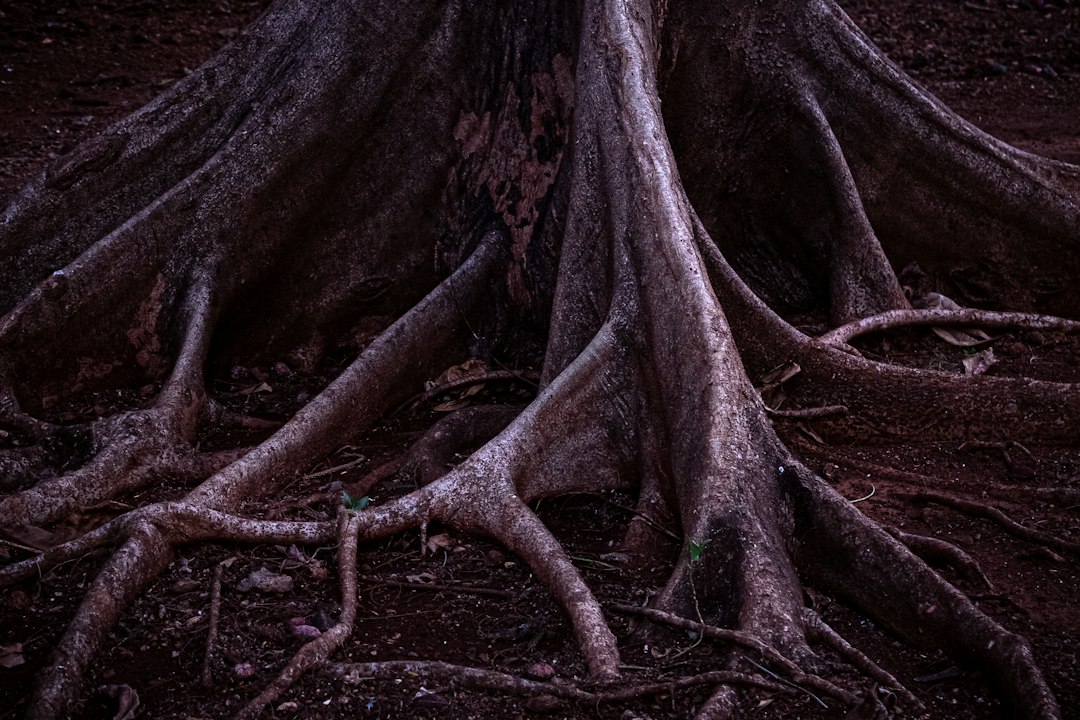
A big silver maple or pin oak looks like free shade, but large trees near a court are trouble. Roots lift and crack slabs over time, falling leaves stain and get slippery, and sap and seed pods mean constant cleanup. Keep the pad well away from mature trees and account for the full root spread, not just the trunk. Also look up: overhead power or service lines above a basketball or tennis court are both a safety and a clearance issue.
Leave enough space and safety buffer
The playing surface is only part of the footprint. You need run-off room beyond the lines so players can chase a ball or follow through safely. The right backyard court location gives you the full area the sport actually requires, including buffers and fencing. Our guide on how much space a backyard pickleball court needs walks through real dimensions, and if you are weighing where on the lot it fits, choosing an athletic court location covers the trade-offs in more depth.
Think about access as well. A corner of the yard that a mini-excavator and concrete truck cannot reach adds cost and complication to the build.
Check property lines, setbacks, and utilities
Before you fall in love with a spot, locate your property lines and any easements. Utility locates are not optional: you can request them free through Missouri 811 before any digging, and Missouri law requires marking underground lines before excavation. Setback distances, impervious-surface limits, fence heights, and permit rules vary by jurisdiction across the metro, and many Kansas City neighborhoods and subdivisions add HOA requirements on top. Rules around zoning, permitting, and easements change, so confirm the specifics with your local building department or a licensed professional rather than assuming.
If drainage is a concern on your chosen spot, our court drainage solutions page explains how we manage water on challenging Kansas City lots, and the drainage work before installing a new court article shows what that prep looks like in practice.
Match the location to the sport and the long game
A pickleball court, a full tennis court, and a backyard basketball pad each have different footprints, orientation priorities, and surfacing needs. The right spot for one may be wrong for another, which is why sports court installation in Kansas City should always begin with a site review. Once the site is chosen and built well on a sound sub-base, a quality surface in our climate can last many years with routine upkeep. For a sense of surface lifespan here, see how long a sport court surface lasts in Kansas City, and plan the location with resurfacing access in mind too.
Choosing a location is the first real decision in a court project, and it is the one that quietly determines cost, longevity, and how often you will actually play. Get the drainage, sun, spacing, and legal checks right up front, and everything downstream gets easier.